.webp) 18+
18+
18+
18+
Everything you need to know about Tower Rush RTP, high volatility mechanics, and how to match your bankroll to the right game style in 2026.
Free demo — no real money. Mirrors the real game's behaviour. May be unavailable in some regions.
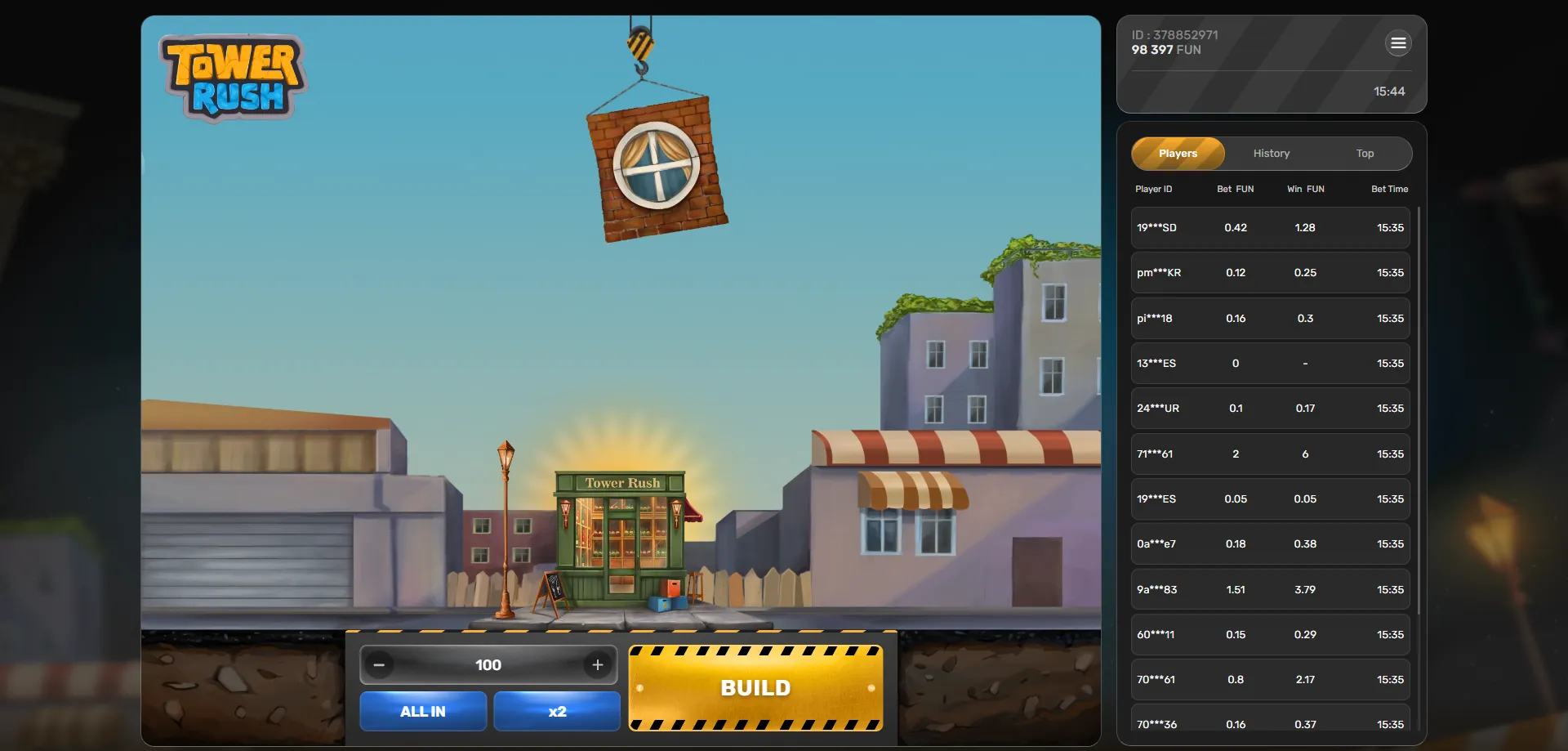
Tower Rush by Galaxsys carries a published tower rush rtp of approximately 97%, which puts it well above the average for most online casino titles. But if you have ever sat beside another player running a game with an identical RTP figure and watched completely opposite results unfold over the same time window, you already know that the number on the paytable tells only part of the story. Two games can share the same long-run return percentage while delivering radically different session experiences — and the mechanism behind that difference is volatility, sometimes called variance or dispersion.
Variance describes how a game distributes its payouts across time. A low-variance title spreads wins evenly — small amounts land frequently, keeping your balance relatively stable. A high-variance title, like Tower Rush, clusters its payouts unevenly: long stretches where the tower collapses early are punctuated by sessions where you catch a soaring multiplier and recover several rounds of losses in a single cash-out. Neither distribution is better in absolute terms; they suit different budgets, risk tolerances, and playing styles.
The RTP percentage is calculated across millions of rounds. Within any individual session of, say, 50 rounds, the actual return you experience can land anywhere on a wide spectrum. A 97% RTP game does not promise you will get ₹97 back for every ₹100 you stake this afternoon — it promises that over an astronomically large sample, the aggregate return trends toward that figure. Short sessions introduce significant statistical noise, and high volatility widens that noise considerably. Understanding this prevents the most common mistake players make: abandoning a game after a cold streak because they believe it is not performing to its stated RTP.
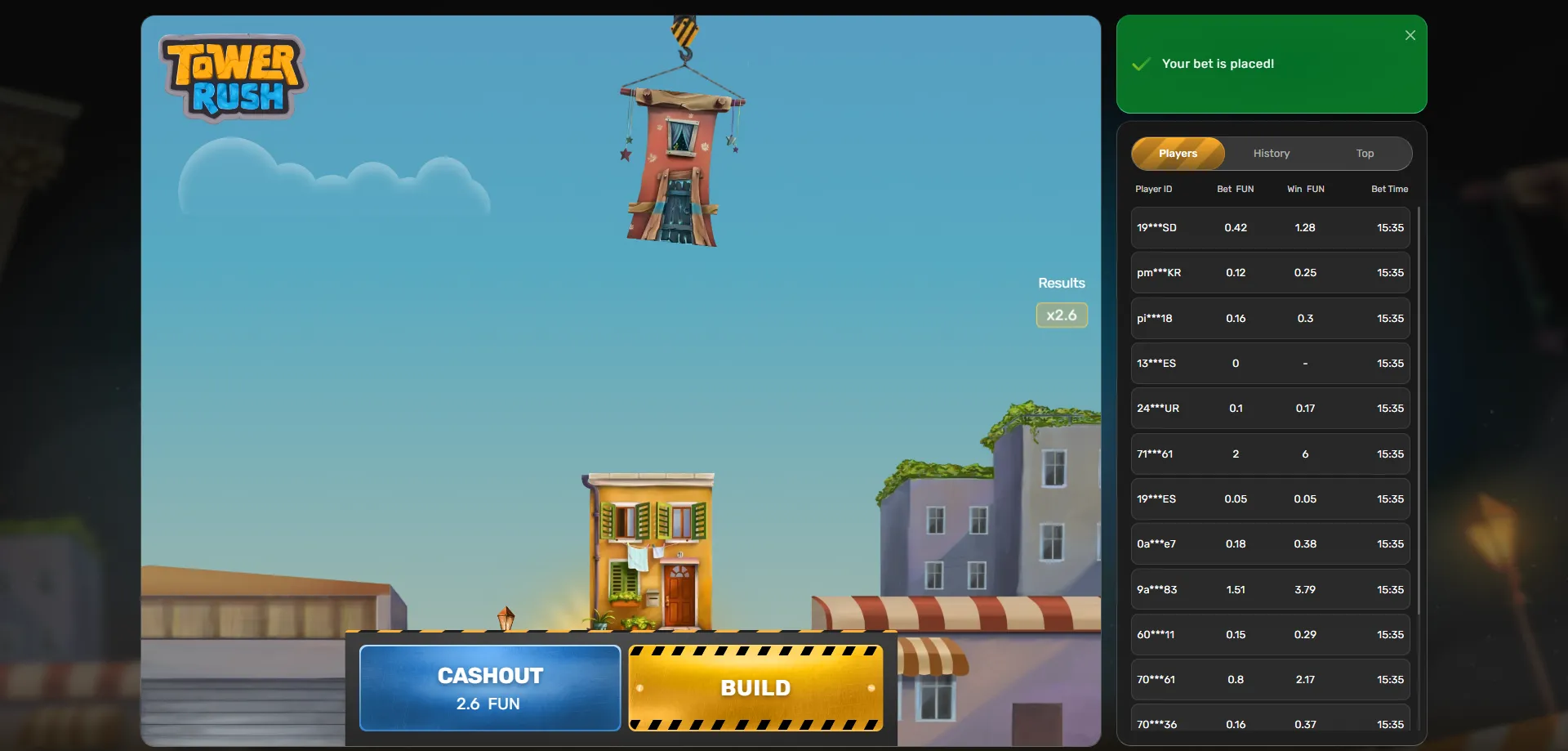
Return to player is a well-understood concept in regulated markets, yet it remains one of the most misread statistics in the casino space. Before applying any bankroll strategy around Tower Rush or any other title, it pays to understand exactly what the figure does and does not guarantee.
The RTP printed in a game's information panel is a theoretical value derived from the game's mathematical model. Regulators and testing laboratories such as eCOGRA or GLI certify these figures by running the game's algorithm through simulation runs numbering in the hundreds of millions. The outcome of your personal 30-minute commute session has no obligation to mirror this number. What the figure does provide is a useful comparison tool: a game with 97% theoretical RTP will, averaged across an enormous player base, outperform a game at 94% RTP. For Tower Rush specifically, the ~97% figure is a strong marker compared to the typical 94–96% range of traditional slot machines.
The gap between a 94% and a 97% RTP might appear trivial — just 3 percentage points. But compounded over sustained play, the difference is meaningful. On a ₹1,000 session budget, the theoretical house edge at 94% RTP is ₹60, while at 97% it narrows to ₹30. Double your session budget or double your bet frequency and the gap doubles with it. For a player who commutes daily and fires through 40–60 rounds during a train ride, choosing a game with competitive RTP is one of the highest-leverage decisions available — arguably more impactful than any betting pattern or timing strategy.
Volatility is most useful when treated as a matching tool rather than a quality rating. There is no universally superior level — the right choice depends on how much you have to play with, how long you want your session to last, and whether you are chasing a specific payout target or simply looking to extend entertainment time.
Low-volatility titles return small wins frequently, giving the player consistent feedback and a relatively flat balance curve. If you are on a tight budget, want to stretch ₹500 across an hour-long journey, or are still learning how a new game mechanic works, low-volatility options give you more rounds for your money. The trade-off is that transformative payouts — the kind that multiply your session stake several times over — are rare. For Tower Rush specifically, the game's high volatility profile means it occupies the opposite end of this spectrum, so players seeking the low-variance experience may prefer to use the game's demo mode first to calibrate expectations.
Medium-volatility titles sit in the middle ground: wins are moderately frequent and occasionally substantial. This category tends to have the broadest player appeal because the balance curve neither flatlines nor cliff-drops. If Tower Rush's high volatility feels too aggressive for your current bankroll, looking for crash-style alternatives with a medium rating — or applying a conservative auto cash-out threshold within Tower Rush itself — can replicate a more moderate risk profile within the same game format.
Tower Rush is classified as a high-volatility game. Rounds can collapse within seconds of starting, and losing streaks are a structural feature, not a malfunction. The recommended entry approach is to size individual round stakes at no more than 1–3% of your total session budget. On a ₹2,000 session fund, that translates to ₹20–₹60 per round, giving you enough runway to survive a cold stretch and still be in the game when a high multiplier materialises. Setting an auto cash-out at a modest 1.5×–2× threshold captures smaller, more frequent wins and is a reliable stabiliser during the learning phase.
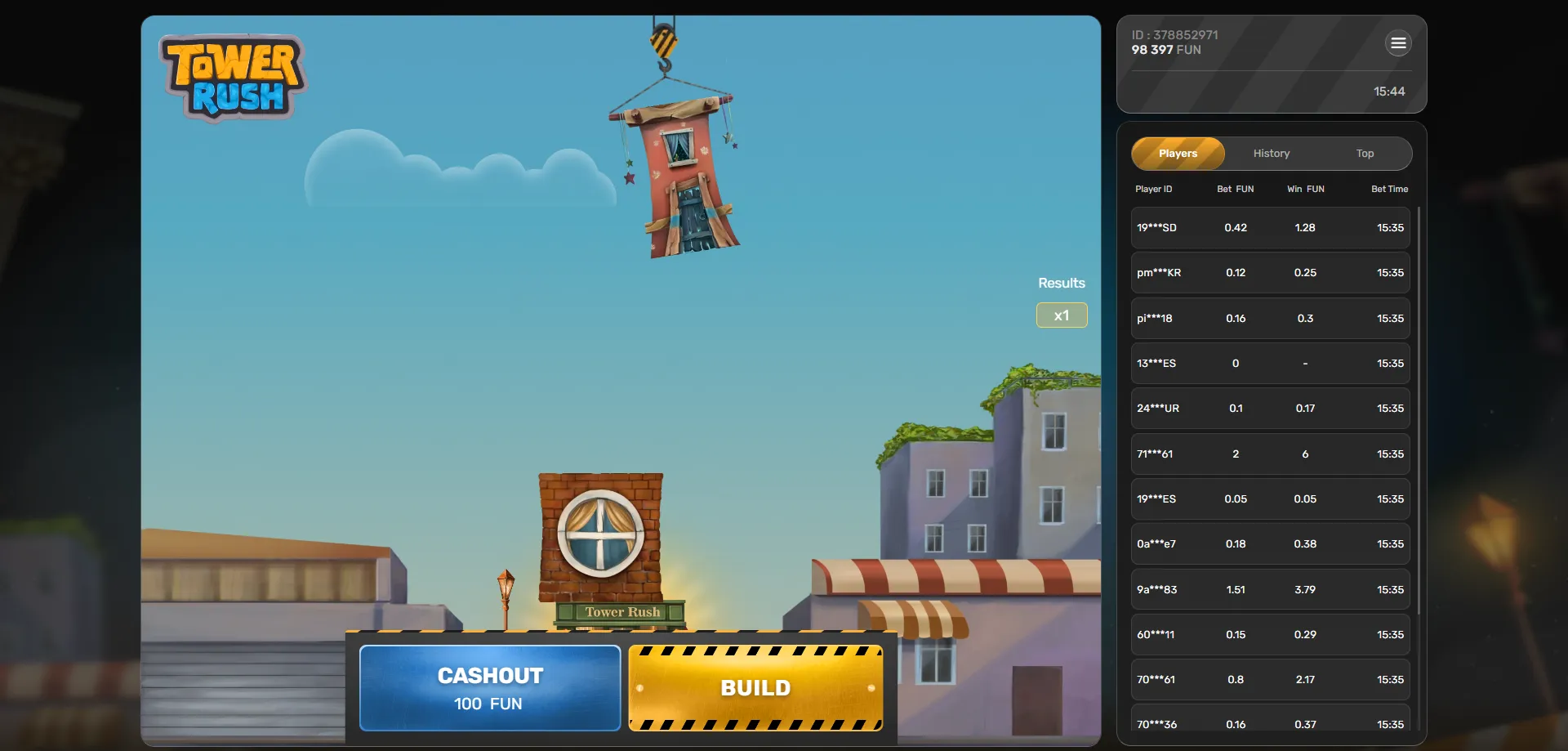
Volatility and session length are directly linked through a simple relationship: the higher the variance, the wider the swings, and the more capital you need to fund a session of a given duration. A player commuting for 45 minutes who wants to complete roughly 60 rounds of Tower Rush should budget conservatively. At a ₹30 stake per round, that is ₹1,800 of theoretical action — but because of high volatility, the actual balance at any point could be significantly above or below the mathematical expectation. Keeping stakes small relative to your total fund is the most practical lever you have for controlling session length. Auto-cashout also doubles as a session management tool: locking in a 1.8× threshold removes the temptation to chase multipliers past your comfort zone and helps you leave the session with a portion of your budget intact for the next commute.
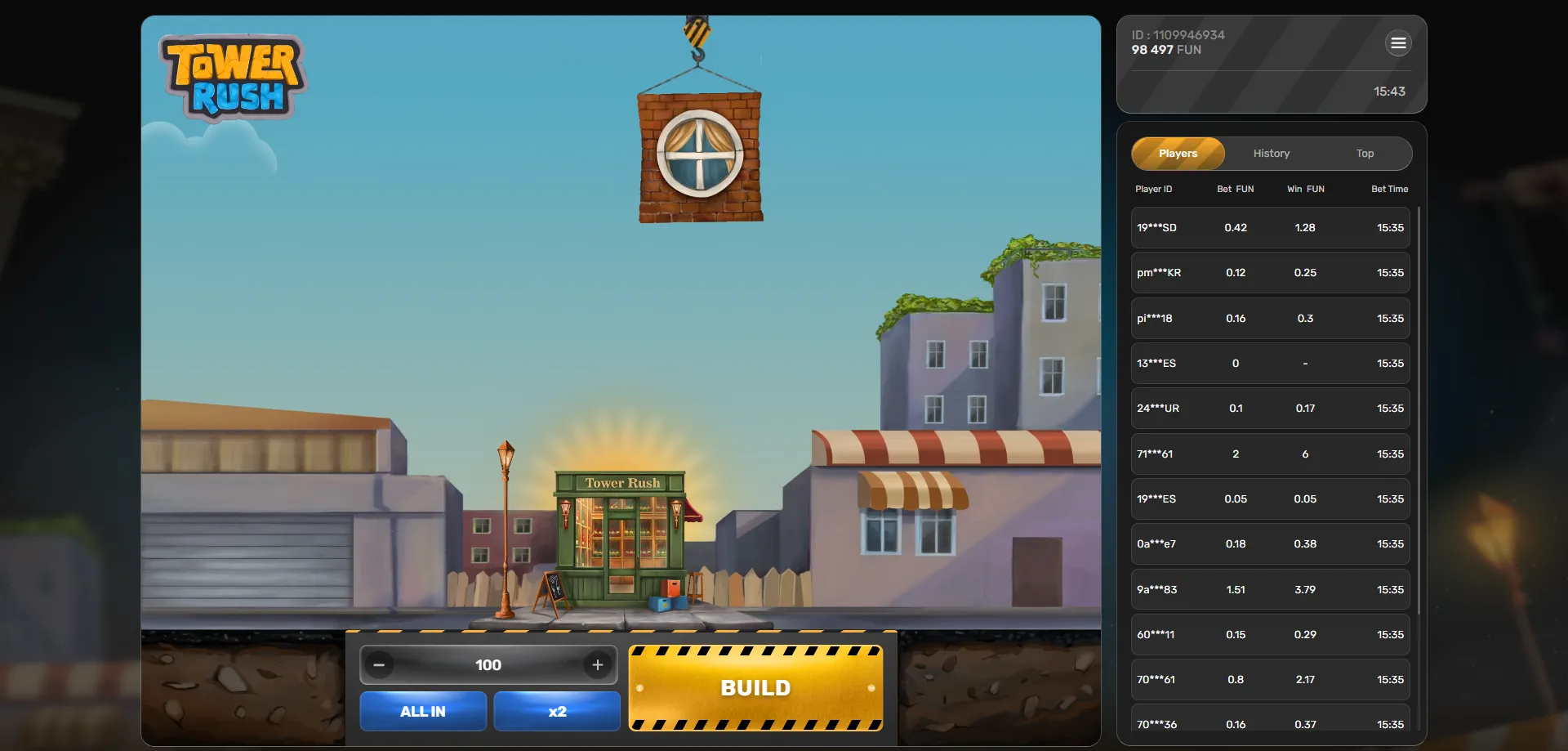
While Tower Rush (the crash game) is the headline title on the platform, the broader Tower Rush casino catalogue spans multiple providers and game formats. The table below outlines representative RTP figures across key titles available on the platform, giving you a quick reference for selecting games that align with your expected return targets.
| Game Title | Provider | RTP | Volatility | Format |
|---|---|---|---|---|
| Tower Rush | Galaxsys | ~97% | High | Crash / Multiplier |
| Aviator | Spribe | 97% | High | Crash |
| Sweet Bonanza | Pragmatic Play | 96.48% | High | Slot |
| Gates of Olympus | Pragmatic Play | 96.50% | High | Slot |
| Book of Dead | Play'n GO | 96.21% | High | Slot |
| Starburst | NetEnt | 96.09% | Low | Slot |
Galaxsys consistently publishes some of the most competitive RTP figures in the crash-game segment, with Tower Rush sitting at ~97% — a benchmark that rivals Spribe's Aviator and comfortably exceeds the typical 94–96% range of reel-based slots. Pragmatic Play and NetEnt round out the high-RTP tier within the broader catalogue. When browsing on mobile between stops, filtering by provider rather than by individual game title is a fast way to narrow your options down to games where the mathematical starting point is already in your favour.
This is the question most players face when they open Tower Rush on their phone with ₹500 to spare on a 20-minute commute. The honest answer is that both matter, and they interact. Tower Rush offers the best of one and the challenge of the other: a strong 97% RTP limits the long-run house edge, but high volatility means short-session outcomes are unpredictable. On a tight budget, the priority should be volatility management over RTP chasing. A game with 96% RTP and medium volatility will statistically be kinder to a small bankroll over a short session than a 97% RTP high-variance title, even though the latter is mathematically superior at scale. If Tower Rush is your game of choice and your budget is limited, apply the 1–3% stake sizing rule strictly and set a modest auto cash-out level. This effectively converts a high-volatility game into a more moderate-variance experience within your session window.
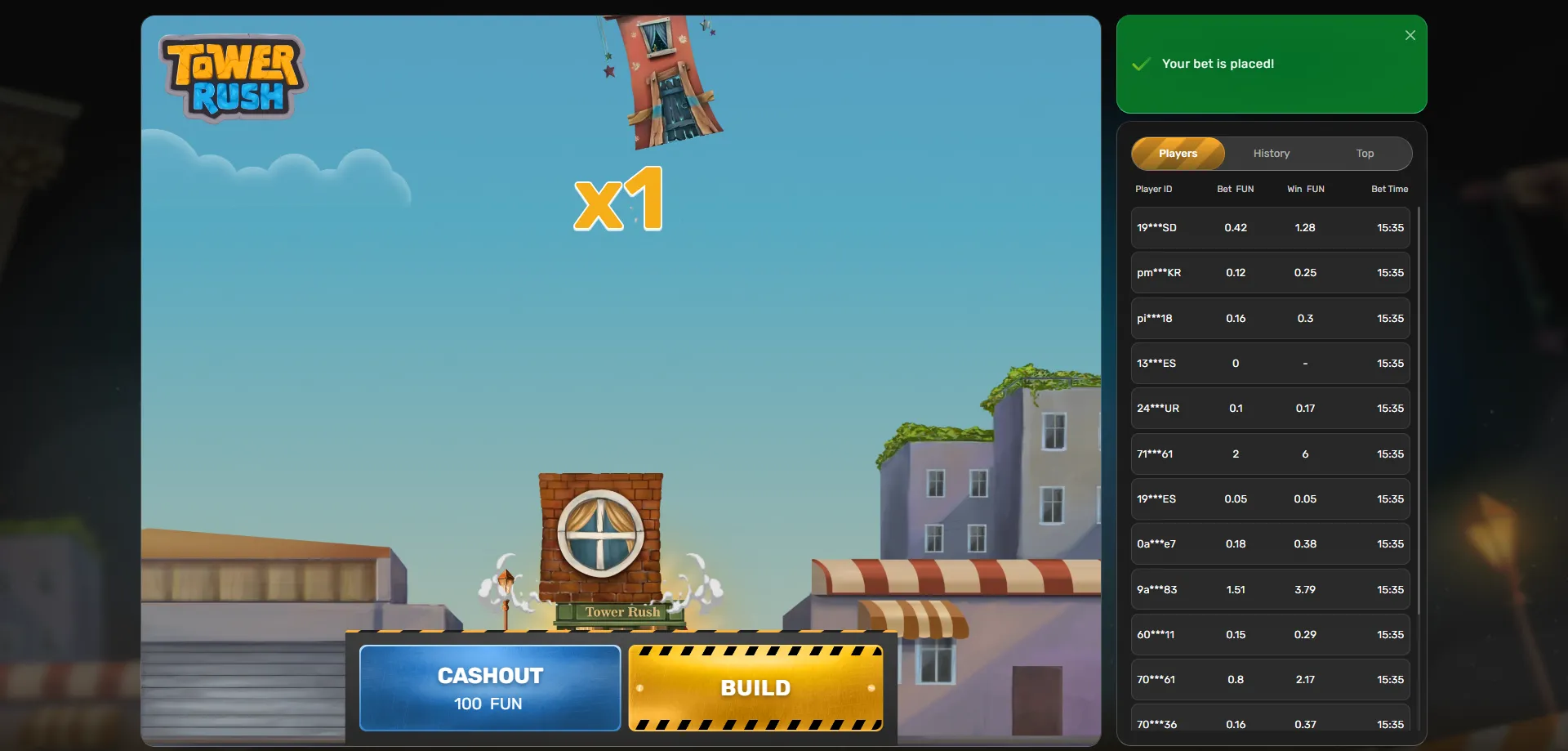
Tower Rush is fully playable in demo mode without a real-money deposit, and this is one of the best ways to calibrate your understanding of the game's variance before risking live funds. On mobile — whether you are using the Android APK downloaded from the casino's site or accessing through Safari on iOS — the demo is accessible directly from the game lobby without registration on many platforms. Here is a practical step-by-step approach for using demo mode as an RTP and volatility testing tool:
This process gives you a practical feel for the volatility profile that no written description fully captures. It also helps you settle on a cash-out strategy before real money is at stake.
Bonuses look like free value on the surface, but their interaction with RTP is more nuanced than it appears. A welcome bonus or free spins offer can meaningfully increase your effective RTP — the return you actually experience relative to your own deposited funds — but only if the wagering conditions are manageable.
A wagering requirement dictates how many times you must turn over a bonus amount before withdrawing any winnings from it. For example, a ₹1,000 bonus with a 30× wagering requirement obliges you to place ₹30,000 in total bets before the funds become withdrawable. At Tower Rush's ~97% RTP, the theoretical house edge per round is approximately 3%. Applied to ₹30,000 of required wagering, the statistical cost of clearing that bonus is around ₹900 — nearly the full bonus value. This does not mean bonuses are worthless; it means the headline bonus amount is rarely the figure you should base your decision on. Lower wagering multipliers (10×–20×) make a bonus genuinely accretive to your effective RTP. Higher multipliers (40×–50×) can erode the benefit entirely, especially on high-volatility games where variance amplifies the statistical cost. Always read the bonus terms on Tower Rush before opting in, and check whether crash games contribute fully to wagering — some platforms restrict crash titles to a reduced contribution rate.
Even experienced players fall into predictable traps when applying RTP and volatility knowledge to their game selection. Here are the most frequent errors and how to sidestep them:
Selecting a game that fits your current session budget, time window, and risk appetite is easier when you work through a short set of questions before opening anything. This framework applies to Tower Rush and every other title in the catalogue:
For deeper reading on how to apply these principles specifically to Tower Rush, the Tower Rush Strategy — Tips and Tricks to Win page covers cash-out patterns and bankroll frameworks in detail. New players who want to understand the base mechanics first should visit Tower Rush Rules — How the Game Works, while a full assessment of the platform's legitimacy and game range is available in the Tower Rush Review.
Sign up today to claim your exclusive climb multiplier and start your journey with a massive boost. Don't miss your chance to conquer the leaderboard!
🚀 Play Now🔒 18+ · T&C Apply · Play Responsibly